
Lincoln County Police Records Search
Police records in Lincoln County are held by the Lincoln County Sheriff's Office in Ivanhoe and made available under the Minnesota Government Data Practices Act. This page explains what law enforcement data is public in this southwest Minnesota county, how to request records from the Sheriff's Office, and which statewide tools like the BCA and MCRO can help you find additional data. The Sheriff's Office is the primary contact for most county police records.
Lincoln County Overview
Lincoln County Sheriff's Office
The Lincoln County Sheriff's Office is based in Ivanhoe, the county seat of this small agricultural county on the South Dakota border. Because Lincoln County is rural and sparsely settled, the Sheriff's Office is the main law enforcement agency for most of the county. It handles the bulk of calls for service, arrests, and incident reports for events outside of small cities with their own police coverage.
For current contact information, hours, and any online tools or request forms, visit the official site at co.lincoln.mn.us. The site provides the most current information about how to submit a data practices request and what record formats are available.
Lincoln County is part of the 5th Judicial District. Court cases originating from county arrests are heard in that district. Court records are a separate system from police records and can be searched at no cost through the statewide Minnesota Court Records Online portal.
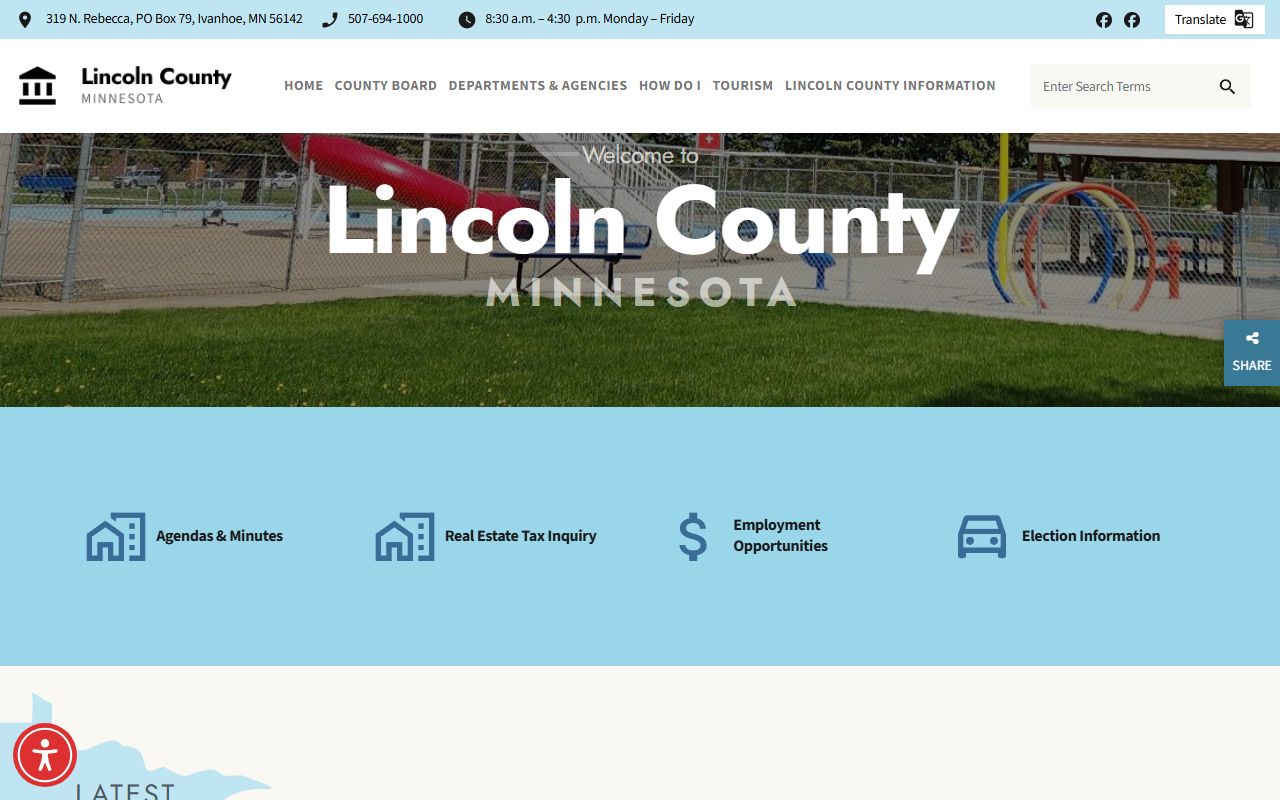
The Lincoln County website provides department contacts and services, including resources from the Sheriff's Office for records requests.
What Police Records Are Public in Lincoln County
Under Minn. Stat. 13.82, certain arrest data must be made public by law enforcement agencies in Minnesota. This data is public from the moment it is created and includes the name, age, sex, and last known address of anyone arrested; the specific charges; the date, time, and location of the arrest; and any booking photo taken at the time of processing. Anyone may request this information at any time.
Data from active investigations is protected. If a case is open and ongoing, releasing information could harm the investigation, alert a suspect, or put witnesses at risk. Once a case closes, more of the record becomes available. Some portions, such as data about confidential informants or private information about people not charged, may still be withheld even after the case ends.
Incident reports are among the most commonly requested types of records. These cover a wide range of officer activity, from routine calls to serious incidents. The basic facts of a call, including the type of incident, the address, and the general outcome, are usually public. Detailed personal information about victims, witnesses, or juveniles is typically redacted. This is consistent practice under Minnesota state law and not unique to Lincoln County.
The governing law is the Minnesota Government Data Practices Act at Minn. Stat. 13.025. This law applies to every government agency in Minnesota and defines what data is public, private, or confidential. Understanding these categories is the key to knowing what to ask for and what to expect when you make a records request.
How to Request Police Records from the Lincoln County Sheriff
To request police records from the Lincoln County Sheriff's Office, submit a written data practices request. Check the Sheriff's Office website to see if there is a form available for this purpose. If not, write out a clear request describing what records you need, the relevant dates, and any names or case numbers you have. You do not have to explain why you are requesting the data.
Viewing records is free. Under Minn. Stat. 13.03, inspection of public data costs nothing. Copies may be charged at up to $0.25 per page for the first 100 pages. After 100 pages, actual reproduction costs apply. For electronic records or large volumes of data, ask about pricing before you finalize your request.
The agency must respond promptly to your request. Most routine requests get a quick response. Larger or more complex requests may take additional time, but the agency is required to tell you about any delays and the reason for them. Ignoring a valid data request is not an option under state law.
If your request is denied, the agency must give you a written reason that cites the specific statute making the data non-public. If you believe the denial is unjustified, you can appeal to the Minnesota Department of Administration's Information Policy Analysis Division. That office handles data practices complaints for all government agencies in Minnesota.
BCA Background Checks and Statewide Criminal History
Criminal history records at the state level are maintained by the Bureau of Criminal Apprehension. Under Minn. Stat. 13.87, this data is private by default, but individuals can always access their own records and certain authorized parties can access others' records for specific legal purposes.
To request your own criminal history record, call the BCA at 651-793-2400, option 7, or use the online portal at dps.mn.gov BCA background checks. The BCA pulls data from all 87 Minnesota counties, so a statewide check may return Lincoln County records that you would otherwise need to request directly from the local Sheriff's Office.
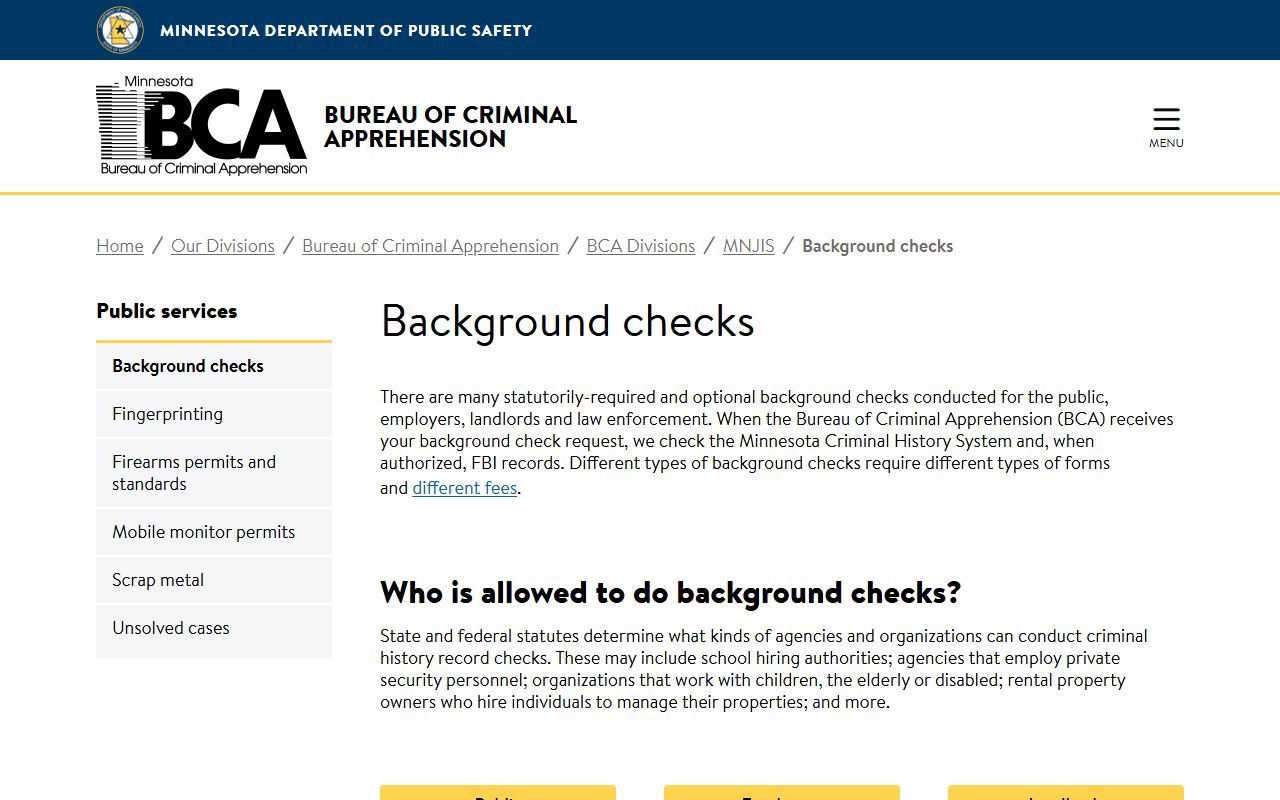
The BCA's online background check service covers all Minnesota counties, including Lincoln County, and is available for personal records requests.
Minnesota Court Records Online
Court records for cases from Lincoln County can be found through Minnesota Court Records Online at publicaccess.courts.state.mn.us. Lincoln County cases go through the 5th Judicial District. You can search for free by name, case number, or date to find charges, hearing dates, and final outcomes.
MCRO is a court records system only. Police reports, officer statements, and investigation materials are not in MCRO. For those, you need to contact the Lincoln County Sheriff's Office. Using both systems together lets you trace a case from the initial police response all the way through the court outcome.
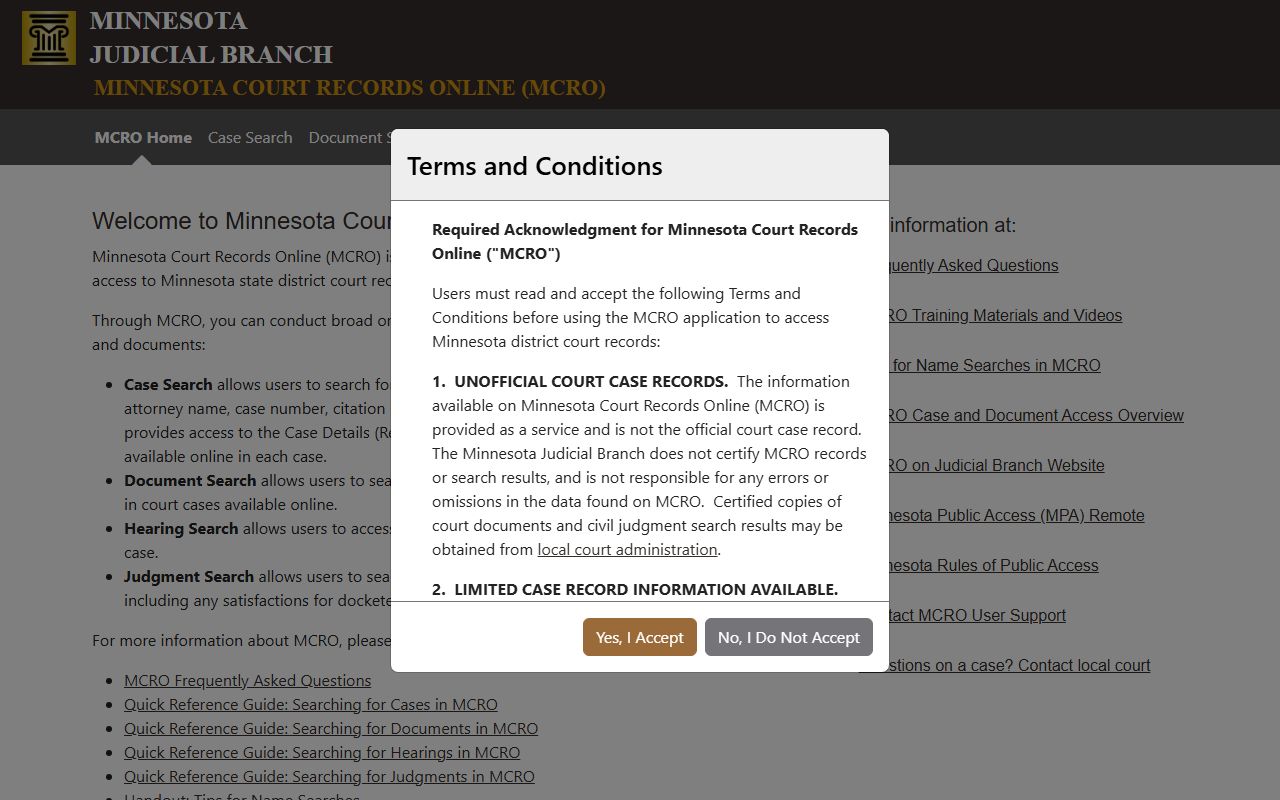
MCRO provides free public access to case data for all Minnesota judicial districts, including the 5th District serving Lincoln County.
Your Data Rights in Lincoln County
If the Lincoln County Sheriff's Office holds data about you, you have rights under Minn. Stat. 13.04. You can ask the agency what data they hold about you, where it came from, and how it is used. The agency is legally required to answer and to allow you to see your data.
If you find that a record about you is wrong, you have 30 days from when you first view it to file a challenge. If the agency does not correct the error, you can appeal within 60 days. This legal right applies statewide and provides a genuine path to fix mistakes in government records, including police and arrest data.
Your personal data access rights go further than general public rights. The public can see basic arrest data listed under Minn. Stat. 13.82, but as the subject of a record, you can request private data about yourself that others cannot access under standard public records rules.
Law Enforcement in Lincoln County
The Sheriff's Office covers most of Lincoln County, but some cities have their own police departments. Ivanhoe and other communities may have local police coverage for incidents within city limits. If the incident you are researching happened inside a city, contact that city's police department for the relevant records, since city departments maintain records separately from the Sheriff's Office.
For incidents on state highways or involving state troopers, the Minnesota State Patrol may hold relevant records. The State Patrol operates through the Minnesota Department of Public Safety and has its own records process separate from county agencies.
If you are not certain which agency handled a matter, calling the Sheriff's Office is a good starting point. Staff can usually tell you who responded to a specific incident and where the records are held.
Nearby Counties
Lincoln County is located in southwest Minnesota and borders several other counties. Use the links below to find police records resources in those neighboring areas.