
Aitkin County Police Records Search
Aitkin County police records cover arrest data, incident reports, and law enforcement files maintained by the Sheriff's Office in this north-central Minnesota county. You can request records in person or by mail, and state law gives you clear rights to inspect public data at no cost.
Aitkin County Overview
Aitkin County Sheriff's Office
The Aitkin County Sheriff's Office is the main law enforcement agency for the county and the primary custodian of police records in Aitkin. The office is located at 217 2nd Street NW in the city of Aitkin, the county seat. It handles patrol across a large, rural area that includes many lakes and forested land. Most records from incidents in unincorporated parts of the county will be held here.
| Address | 217 2nd Street NW, Aitkin, MN 56431 |
|---|---|
| Phone | (218) 927-7456 |
| Non-Emergency | (218) 927-2138 |
| Fax | (218) 927-2109 |
| Website | co.aitkin.mn.us/173/Sheriff |
Records from incidents handled by city police in Aitkin, McGregor, or other communities must be requested from those individual departments. The Sheriff's Office only provides records for cases under its own jurisdiction. If you are not sure which agency handled the case you are looking for, start by contacting the Sheriff's Office and ask.
The Aitkin County website connects you to the Sheriff, Court Administration, and other county offices.
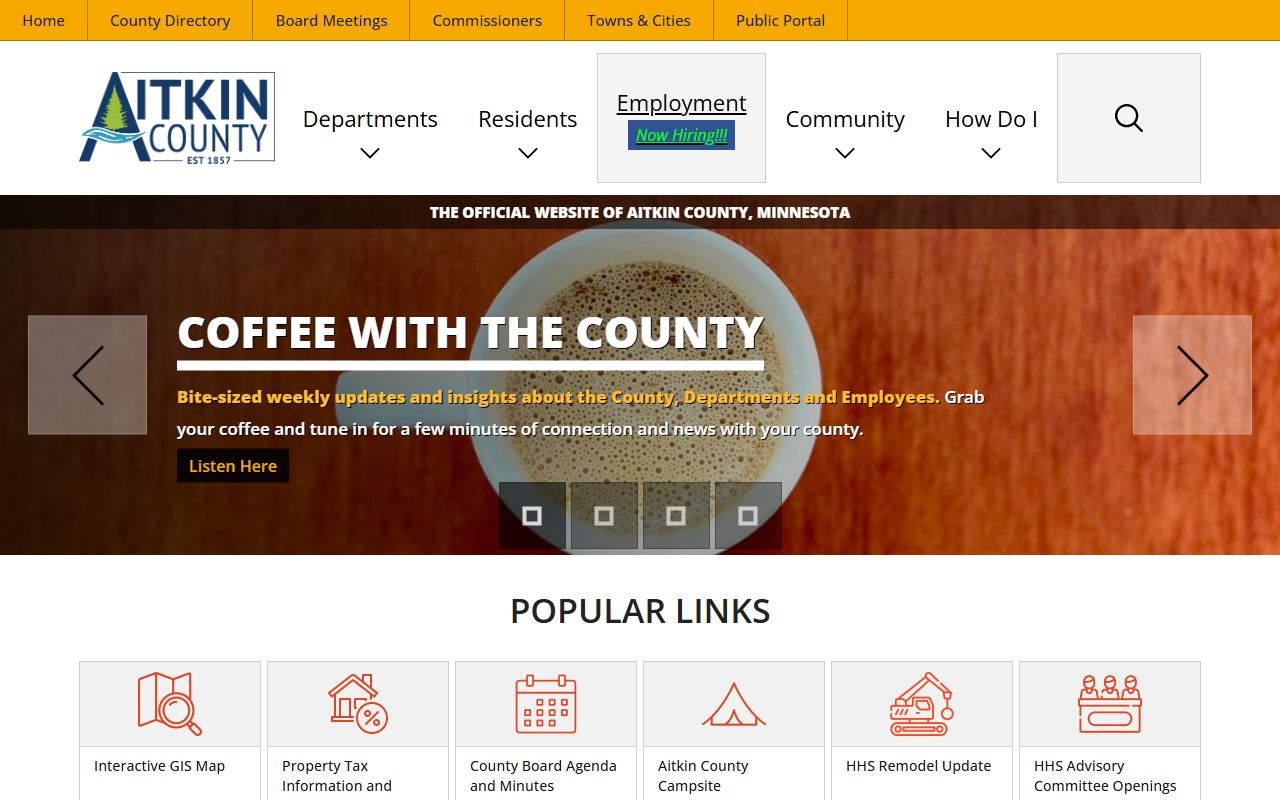
The county site lists contact details and links to all major departments that may hold public records.
Requesting Police Records in Aitkin County
To get police records from the Aitkin County Sheriff's Office, submit a written request in person or by mail. Walk-in requests go to the office at 217 2nd Street NW. Mail requests to the same address and mark them for the Records Division. Give as much detail as possible in your request.
If you have a case number, include it. That one piece of information cuts search time significantly. Without a case number, list the date and location of the incident, the full names of any people involved, and the type of incident. Vague requests slow things down and may prompt the office to ask for more information before they can pull anything.
Under Minn. Stat. 13.03, you have the right to inspect public government data for free. Paper copies cost 25 cents per page for the first 100 pages. If the office denies your request, they must provide that denial in writing and cite the exact statute used to classify the data as private. A verbal denial or a vague response is not legally acceptable. You have ten days to get a response if you are the data subject, and 30 days if you are not.
Do not assume a denial is final. If you think the reason for denial is wrong, you can challenge it. The Minnesota Department of Administration handles appeals for alleged violations of the Government Data Practices Act.
What Aitkin County Arrest and Incident Records Contain
Minnesota law sets clear rules about what police data is public. Minn. Stat. 13.82 is the statute that governs law enforcement records across the state, and the Aitkin County Sheriff's Office follows it like every other agency.
Public arrest data includes the date, time, and place of an arrest. It also includes the name, age, sex, and address of any adult who was arrested, the charges filed, whether a weapon was used, and whether the person was held or released. Incident reports are public too. You can find out what type of incident occurred, where it happened, and which agency responded.
Booking photos are public data. You can request them directly from the Sheriff's Office. The agency may decline only if a specific statutory exemption applies. Active investigation data stays confidential. Once the case becomes inactive, much of that data can be released. If you believe a case you are asking about has closed, say so in your request and ask whether it is now inactive.
911 call transcripts are public data. The actual audio recording is not. Juvenile records are protected and will not be released without a court order. Victim identity in sexual assault and domestic violence cases is also protected.
Aitkin County Court Records Through MCRO
Court records for Aitkin County are separate from Sheriff's Office records. The county is in the 6th Judicial District. Court Administration for Aitkin County is located at 209 2nd Street NW, Aitkin, MN 56431, and can be reached at (218) 927-7350.
For online searches, use the Minnesota Court Records Online (MCRO) system. MCRO gives public access to case indexes, hearing schedules, and some case documents filed in Minnesota district courts. You can search by name or case number. Not all documents are available online, and some cases are sealed or restricted. For full access to a case file, visit the Court Administration office in person.
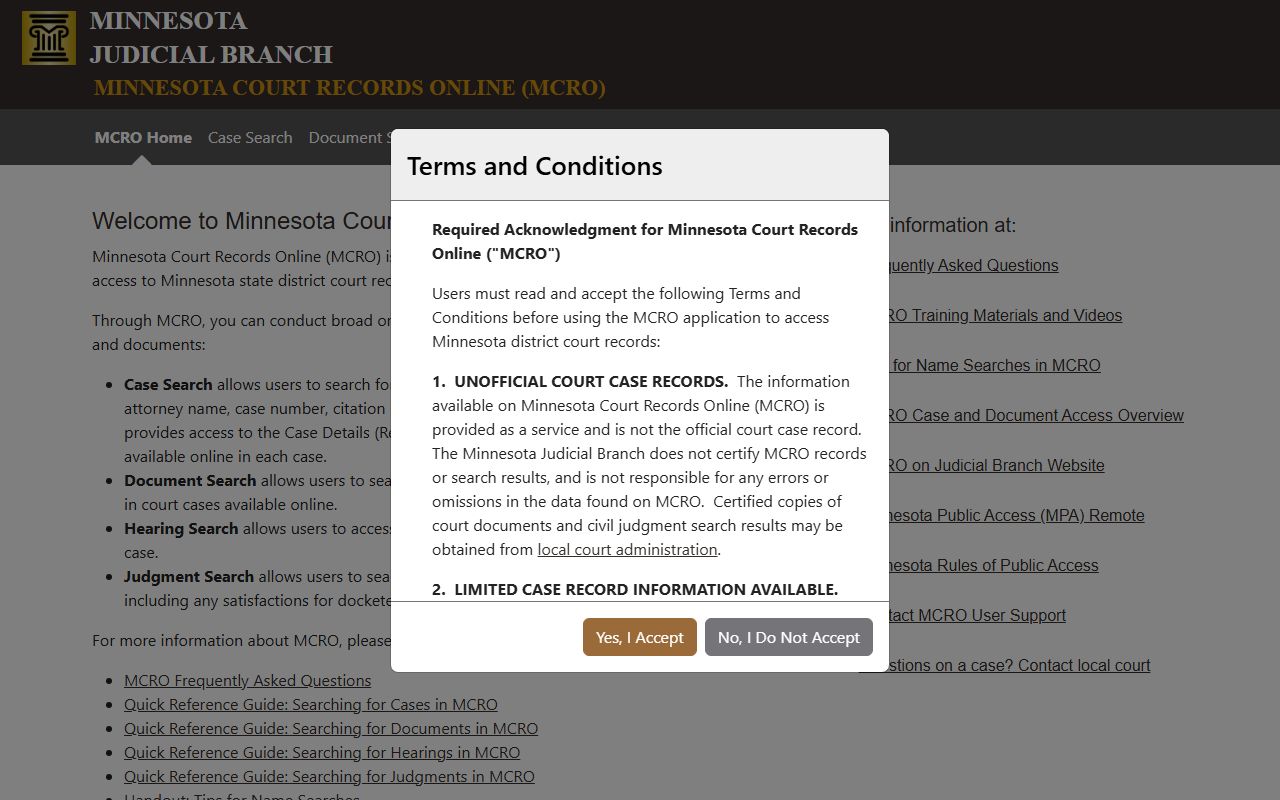
MCRO is the starting point for finding case indexes, court filings, and hearing dates for Aitkin County cases.
Court records and Sheriff's Office records are two separate things. A criminal case may produce both an arrest record (held by the Sheriff) and a court file (held by Court Administration). If you want the full picture, you may need to request from both offices.
Minnesota BCA Criminal History Checks
The Minnesota Bureau of Criminal Apprehension (BCA) maintains the state's central criminal history database. This is separate from any individual county's records. It covers convictions, dispositions, and other criminal history data from across Minnesota.
You can request a background check through the BCA's background check program. Call (651) 793-2400, option 7, or visit the BCA website for forms and instructions. The BCA also offers a name-based personal record check that individuals can request for themselves.
The BCA is under the Minnesota Department of Public Safety. Its records cover the full state, not just one county, which makes it useful when you need a broader picture of someone's history or when you are not sure which county a case was filed in.
Criminal history data rules come from Minn. Stat. 13.87. Access is more limited than for basic arrest data, and some records in the criminal history system are restricted to authorized users only.
Your Data Rights Under Minnesota's Government Data Practices Act
The Minnesota Government Data Practices Act (MGDPA) gives all Minnesota residents a legal right to inspect and copy public government data. Minn. Stat. 13.025 sets the default: all government data is public unless a law classifies it as private, confidential, or protected in some other way.
If you are the subject of a record, you have additional rights under Minn. Stat. 13.04. These include the right to know what data is held about you, the right to request a correction if data is wrong, and the right to appeal a denial. The agency must provide you a Tennessen Warning when collecting data about you so you understand how it will be used.
If you believe an agency has wrongly denied your data request, you can file a complaint with the Minnesota Department of Administration's Information Policy Analysis Division. That office interprets the MGDPA and can issue opinions that carry legal weight. Most disputes are resolved without formal proceedings, but the option to escalate exists.
Know your rights before you request. An informed request is more likely to get a fast, complete response. If an agency stalls, cite the statute. That often moves things along.
Background Checks and BCA Data Access
The BCA offers the most comprehensive statewide criminal history search available to the public in Minnesota. For Aitkin County residents who need a record check or want to see what data the state holds, the BCA is the right starting point.
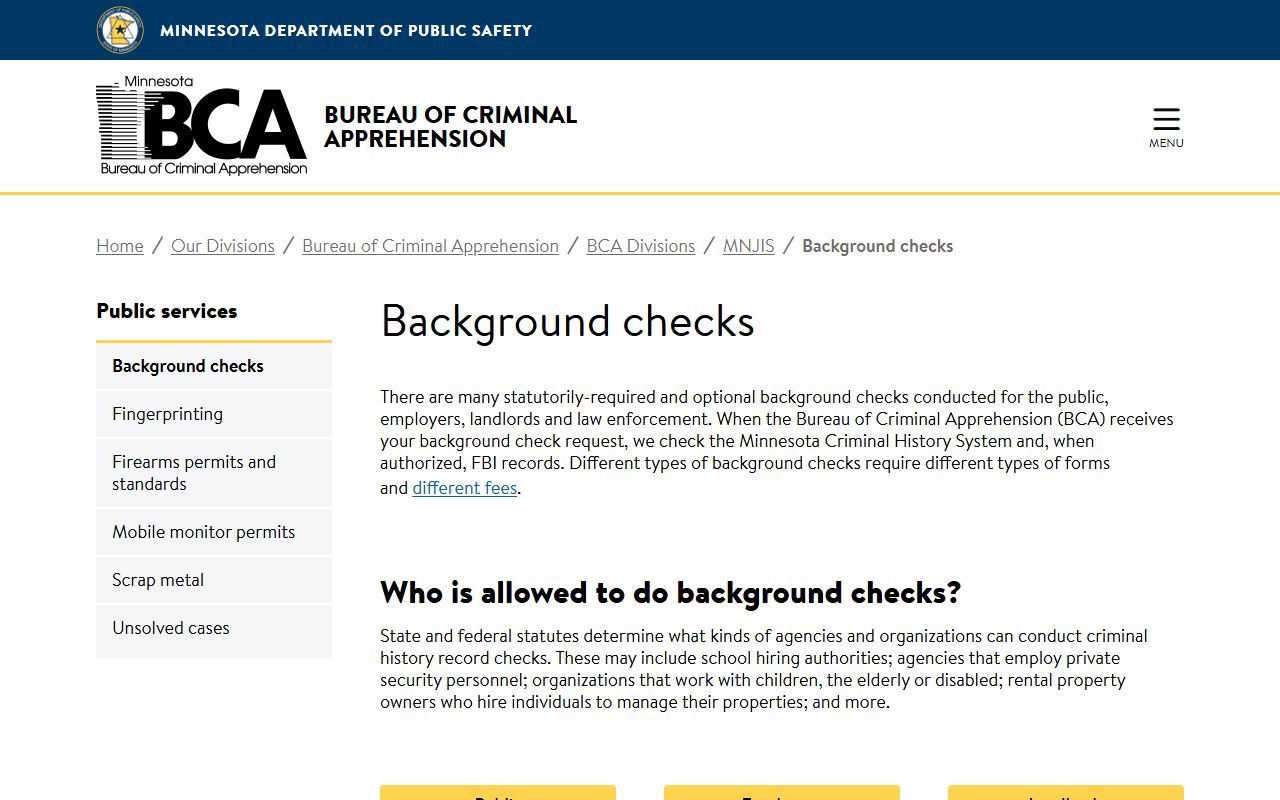
The BCA background check portal lets you submit name-based or fingerprint-based requests for criminal history data held at the state level.
For fingerprint-based checks, you will need to schedule an appointment with the BCA or use an approved third-party vendor. Name-based checks can often be requested by mail. The BCA's site has current fee schedules and turnaround time estimates. Processing times vary.
Nearby Minnesota Counties
Aitkin County borders several other counties. Each has its own Sheriff's Office and court system. If a case or incident crossed county lines, you may need to contact more than one office.