
Search Itasca County Police Records
Police records in Itasca County are held by the Itasca County Sheriff's Office and made available under the Minnesota Government Data Practices Act. From arrest data and booking photos to incident reports filed across Grand Rapids and the rest of this large northern county, this page explains what records are public, how to request them, and which state and local resources to use. The Sheriff's Office in Grand Rapids is the primary contact for most law enforcement records in the county.
Itasca County Overview
Itasca County Sheriff's Office
The Itasca County Sheriff's Office is based in Grand Rapids and covers one of the larger counties in northern Minnesota by land area. Given the size of the county, the Sheriff's Office is the primary law enforcement agency for most of the region, including many rural townships and unincorporated communities that do not have their own local police departments.
For current contact information, hours, and any online request tools, visit co.itasca.mn.us. The site is the best source for up-to-date details about records request procedures at the local level.
Itasca County is part of the 9th Judicial District. Court cases that originate from arrests made in the county are heard in that district. Court records, which are separate from police records, can be searched using the statewide Minnesota Court Records Online tool.
The Itasca County website includes department contacts and services for the Sheriff's Office, including any online records access options.
What Police Records Are Public in Itasca County
Minnesota law is clear about what arrest data must be made public. Under Minn. Stat. 13.82, law enforcement agencies must release certain data to anyone who asks: the name, age, sex, and last known address of the arrested person; the charge; the date, time, and place of the arrest; and booking photos. These records are public from the moment they are created.
Data from active investigations is not public. The law protects ongoing case files because releasing them could tip off suspects, harm witnesses, or undermine the work of detectives. Once a case is closed, more of the record may become available, though some portions can still be withheld if they contain data about third parties or confidential sources.
Incident reports cover a wide range of calls, from minor disputes to serious crimes. The basic facts of each call, such as the type of incident, address, and general outcome, are typically public. But detailed narratives, medical information about victims, or data that could identify a juvenile may be redacted before the report is released. This is standard practice across all Minnesota agencies and is not specific to Itasca County.
The Minnesota Government Data Practices Act, codified at Minn. Stat. 13.025, is the legal foundation for all government data in the state. It classifies data into three tiers: public, private, and confidential. Understanding those tiers helps you know what you can ask for and what the agency is legally required to give you.
How to Request Itasca County Police Records
To request records from the Itasca County Sheriff's Office, submit a written data practices request. Check the Sheriff's Office website first to see if they use a standard form. If no form is listed, a clear written request describing what you need, the relevant dates, and any names or case numbers will work.
Looking at records is free. Under Minn. Stat. 13.03, inspection of public data costs nothing. If you want paper or digital copies, the agency can charge up to $0.25 per page for the first 100 pages. After that, actual costs apply. For large sets of records or electronic formats, ask the agency about pricing before you finalize your request.
The agency must respond to your request in a reasonable time. For routine requests, that usually means same-day acknowledgment and access within a few business days. Larger or more complex requests may take longer, but the agency cannot simply ignore your request or delay indefinitely without explanation.
If your request is denied, the agency must cite the specific law that makes the data non-public. Keep that citation, because you will need it if you choose to appeal. Disputes can be taken to the Minnesota Department of Administration's Information Policy Analysis Division, which reviews data practices complaints statewide.
BCA Background Checks and Criminal History Data
Criminal history records at the statewide level are maintained by the Bureau of Criminal Apprehension. Under Minn. Stat. 13.87, this data is private by default, but individuals can access their own records and certain authorized parties can access others' records for specific legal purposes.
To request your own record, call the BCA at 651-793-2400, option 7, or visit dps.mn.gov BCA background checks. The BCA aggregates arrest and conviction data from all Minnesota counties, including Itasca County, so a statewide check may capture records that a local request would miss.
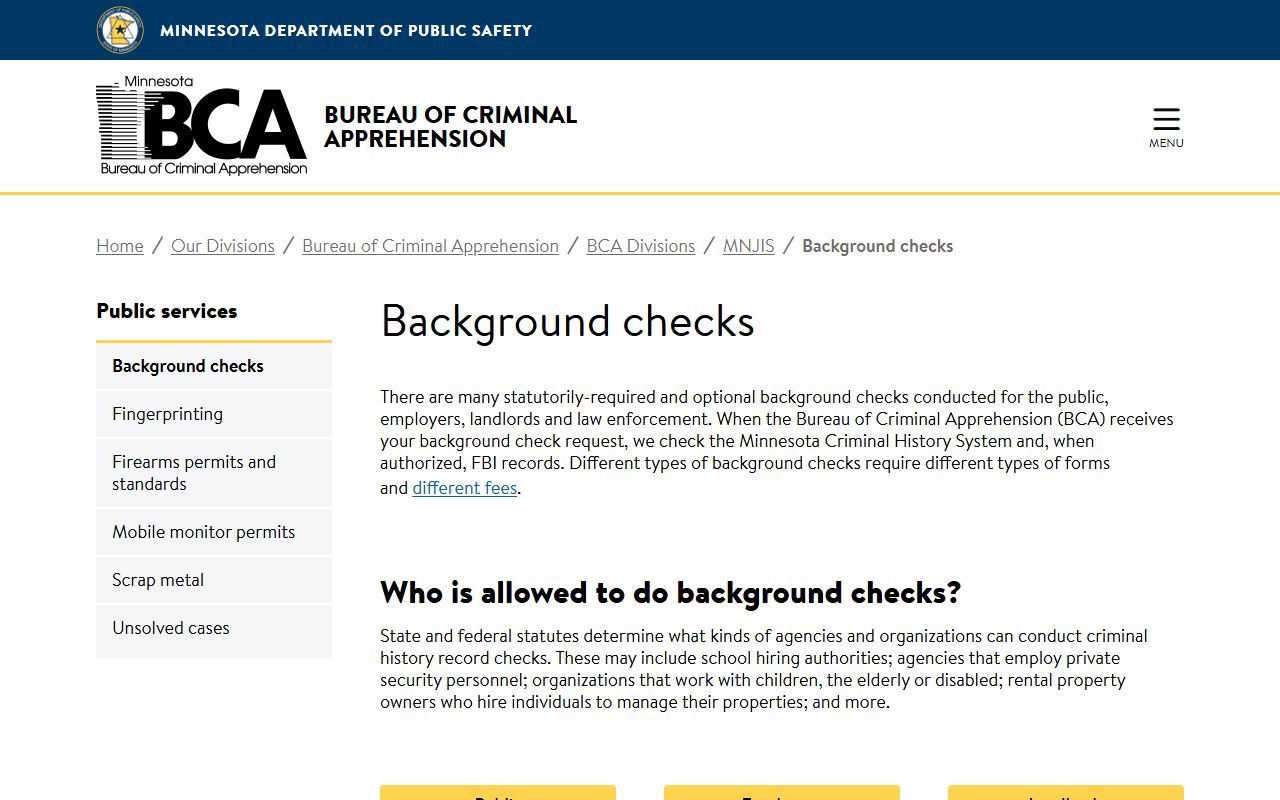
The BCA's online portal provides access to Minnesota criminal history data, including records originating from Itasca County arrests and court proceedings.
Minnesota Court Records Online
If you want to track the court side of a case that started with an Itasca County arrest, use the Minnesota Court Records Online system at publicaccess.courts.state.mn.us. This free portal lets you search by name, case number, or date for cases in the 9th Judicial District. You can see charges filed, hearing dates, motions, and final dispositions.
MCRO does not include police reports, evidence, or investigative files. Those stay with the arresting agency. MCRO is strictly the court record. For the full picture of an incident, you often need to pull from both sources: the Sheriff's Office for the police report and MCRO for the court outcome.
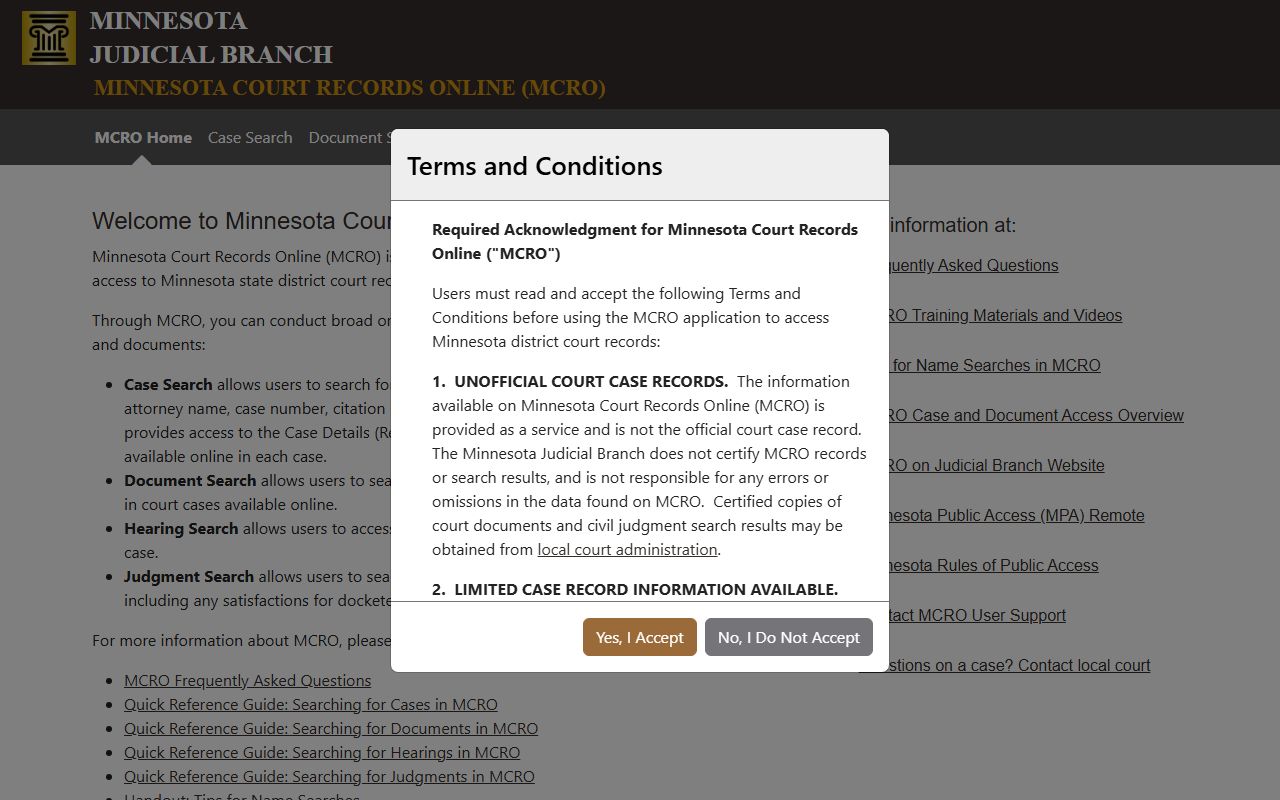
MCRO covers court cases from all Minnesota judicial districts, including the 9th District that serves Itasca County.
Your Data Rights Under Minnesota Law
If the Itasca County Sheriff's Office holds data about you, you can exercise your rights under Minn. Stat. 13.04. You may ask to see any private or confidential data the agency has about you. The agency must explain what data they hold, where it came from, and how it is used.
If you believe a record about you contains errors, you have 30 days from first viewing it to contest the information. If the agency does not correct it, you can appeal within 60 days. This process applies to any government-held data, including police records, and is one of the stronger data rights provisions in the state.
Keep in mind that your access rights as the subject of data are broader than public access rights. The general public can see arrest data listed under Minn. Stat. 13.82, but you can request and review private data about yourself that the public cannot see.
Other Law Enforcement in Itasca County
While the Sheriff's Office is the primary law enforcement agency for most of Itasca County, cities like Grand Rapids have their own police departments that generate and maintain separate police records. If the incident you are researching happened within a city, contact that city's police department for records.
Minnesota also has tribal law enforcement in some regions. If an incident occurred on tribal land in or near Itasca County, records may be held by tribal police rather than county or city agencies. The same general data practices principles apply, but the specific contact point and procedures will differ.
If you are not sure which agency handled a matter, the Sheriff's Office can often point you in the right direction. Starting there is a reasonable approach when the agency that filed the report is unclear.
Nearby Counties
Itasca County is surrounded by several other northern Minnesota counties. Use the links below to find police records resources in neighboring areas.